Food Saving
A new identity and website for a Munich food-rescue nonprofit — designed to reach Gen Z without losing the seniors who rely on it.
- Role
- Research, Identity & Website (built solo)
- Team
- Tanyel Altan
- Context
- Change for Good — HM Munich, real nonprofit client
- Tools
- Figma, Vite, GSAP, Leaflet / OpenStreetMap, Vercel
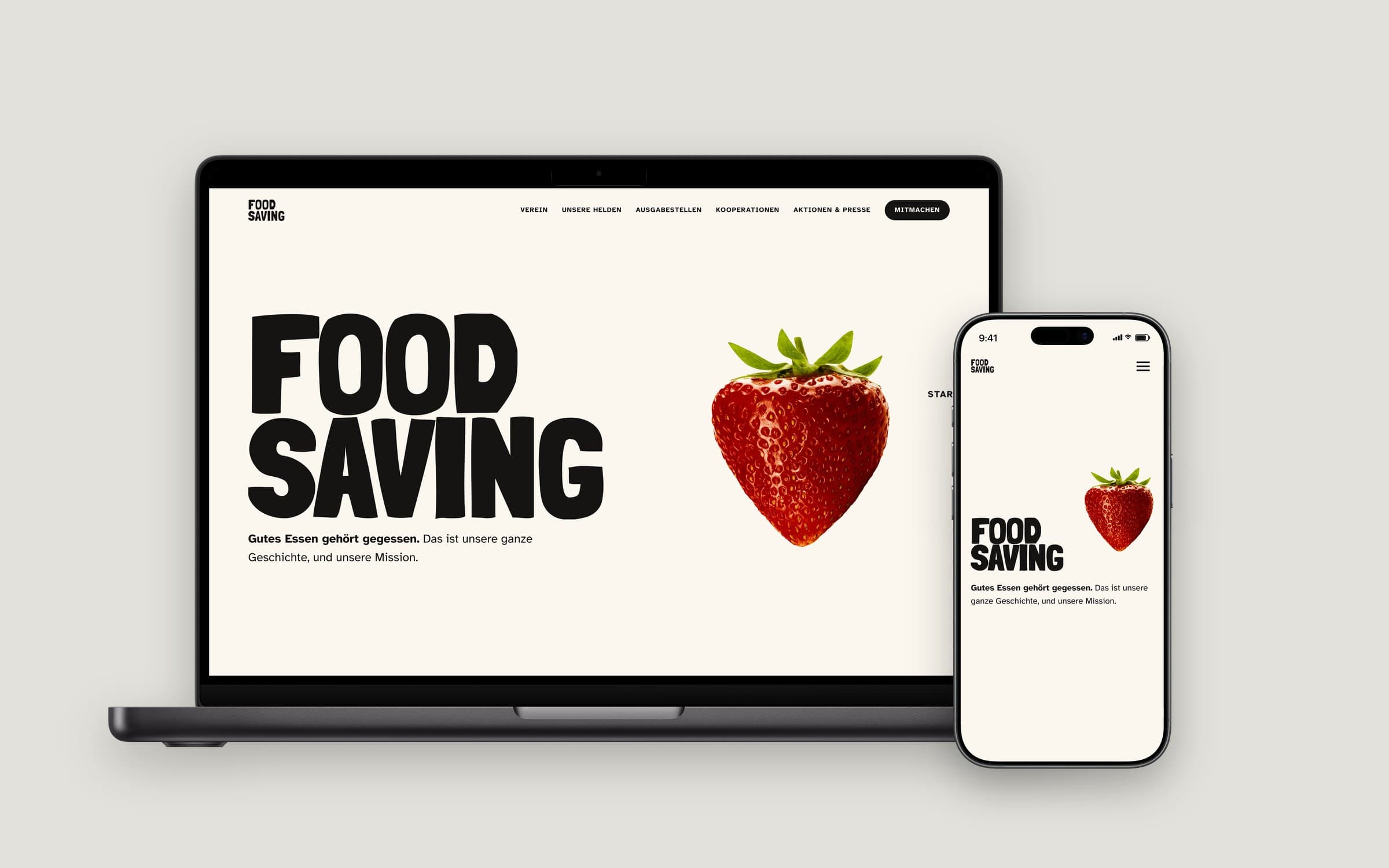
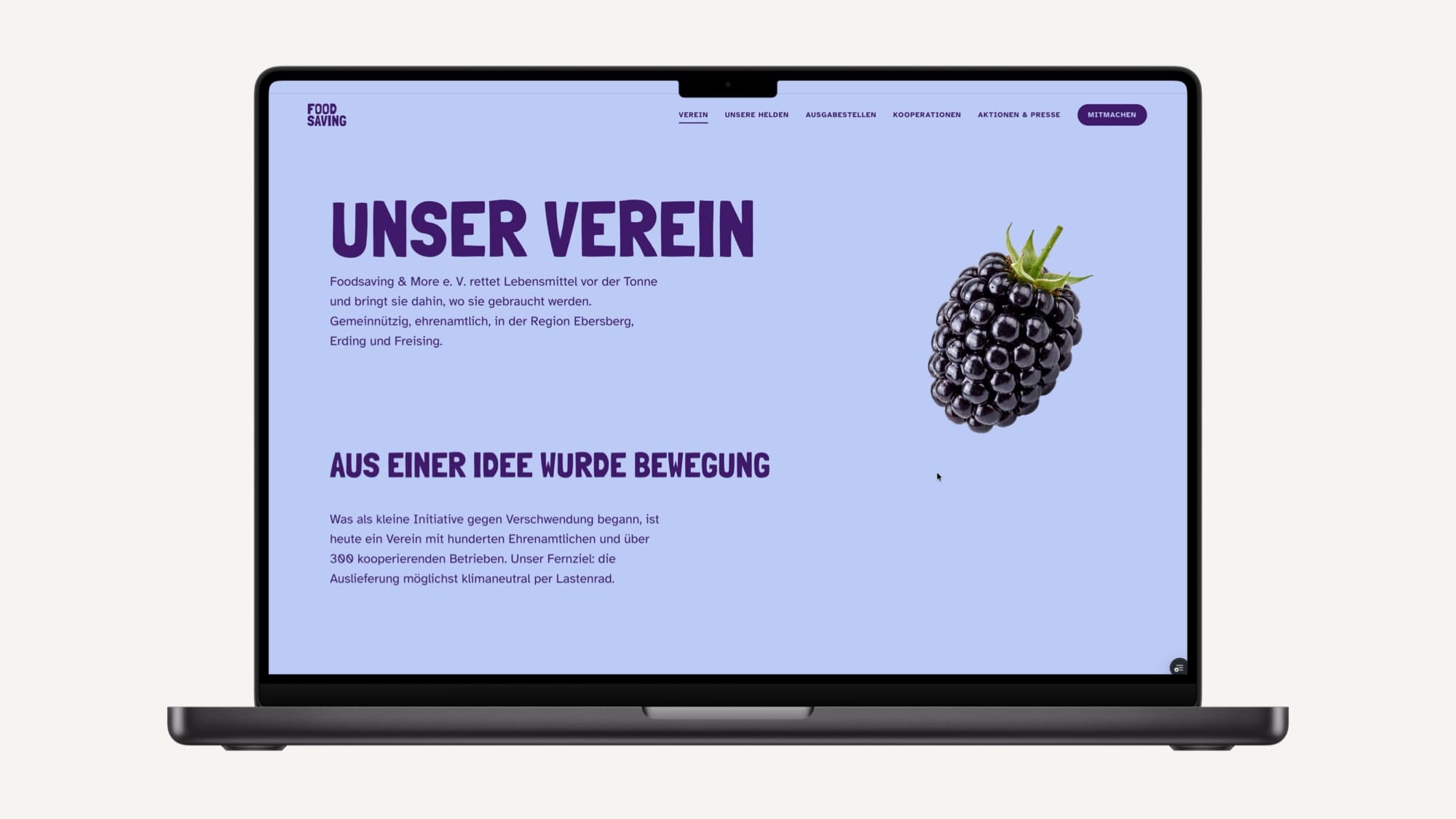
Foodsaving & More e.V. rescues around 35 tonnes of surplus food per week and hands it out for free. Its look didn't match its ambition to grow. In the course Change for Good, my teammate Tanyel Altan and I researched the organisation on site, positioned it against other food-rescue players and created a new identity across print, social and outdoor — and I designed and built the new website.
The brief
Find a small Munich nonprofit that needs design help and involve it actively in the change process. We chose Foodsaving & More e.V., a volunteer-run association that rescues surplus food from businesses and distributes it for free.
Research on site
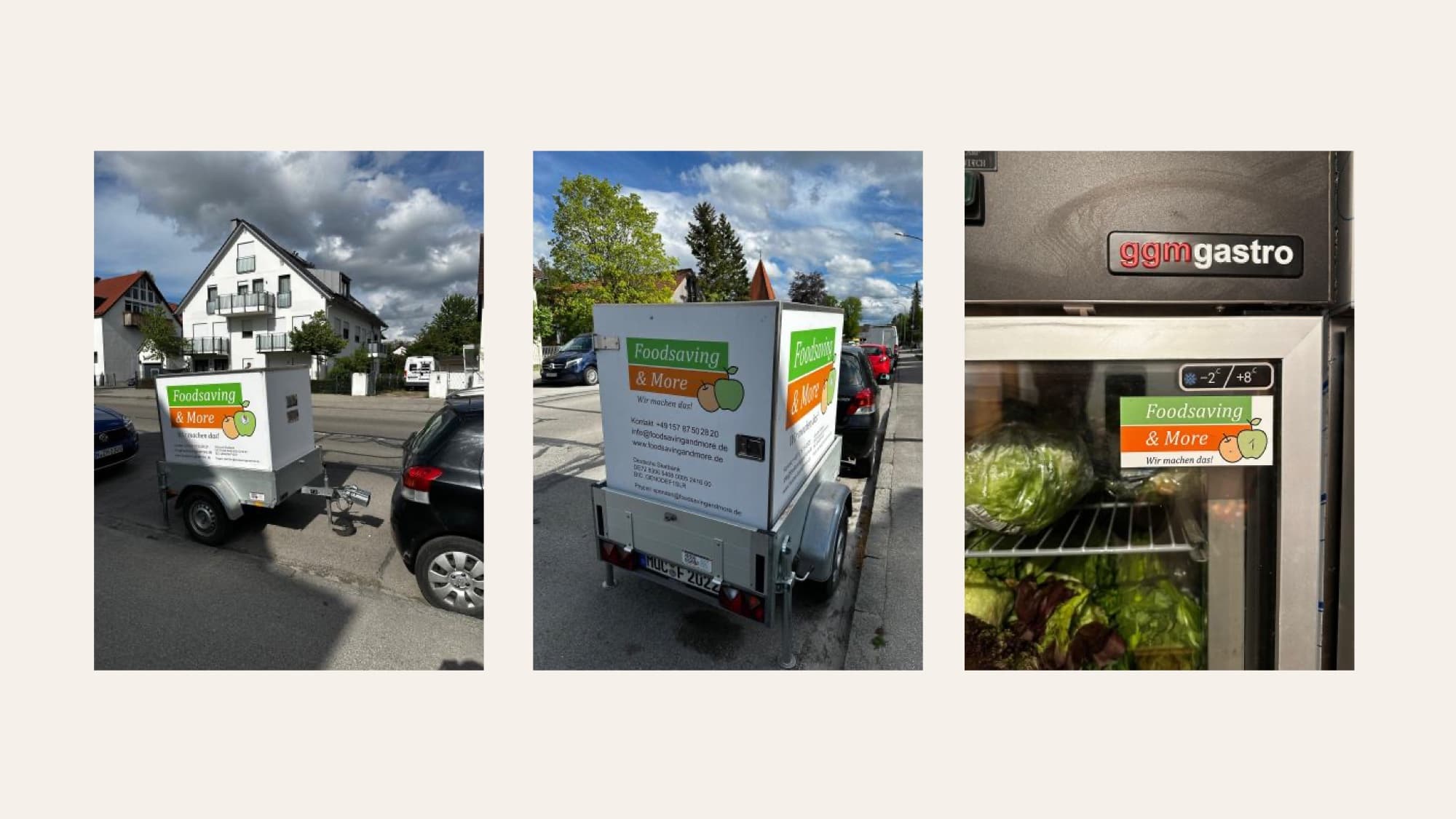
We audited the current identity (logo, flyers, Instagram, Facebook), visited the distribution point and observed who actually comes: volunteers on one side, mostly pensioners picking up food on the other. The association wanted two things at once — reach Gen Z as new volunteers, and expand.
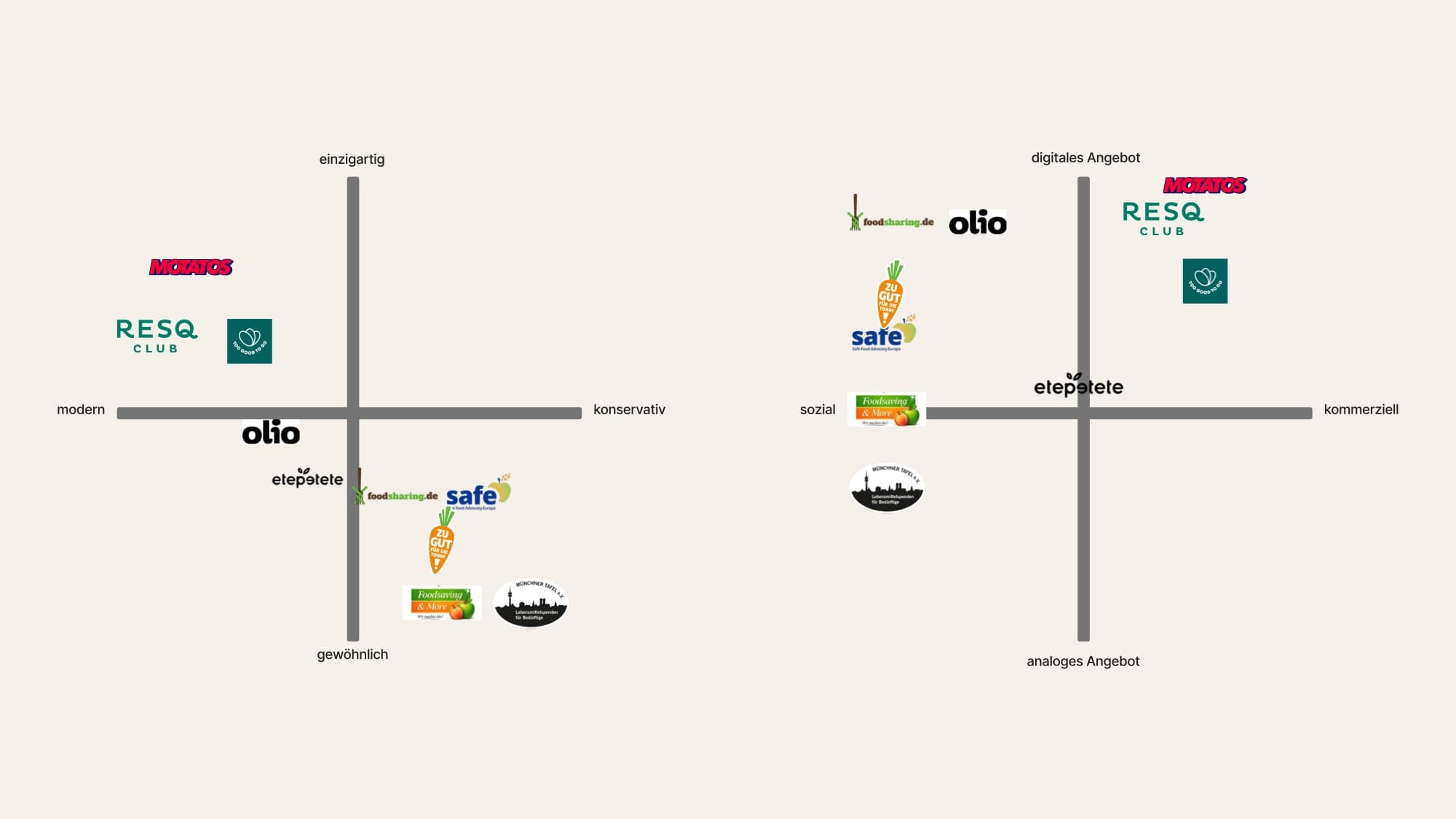
We compared Too Good To Go, Münchner Tafel, Olio, ResQ, SirPlus and others on two positioning maps. The gap: a social, non-commercial organisation that still feels modern and distinctive.
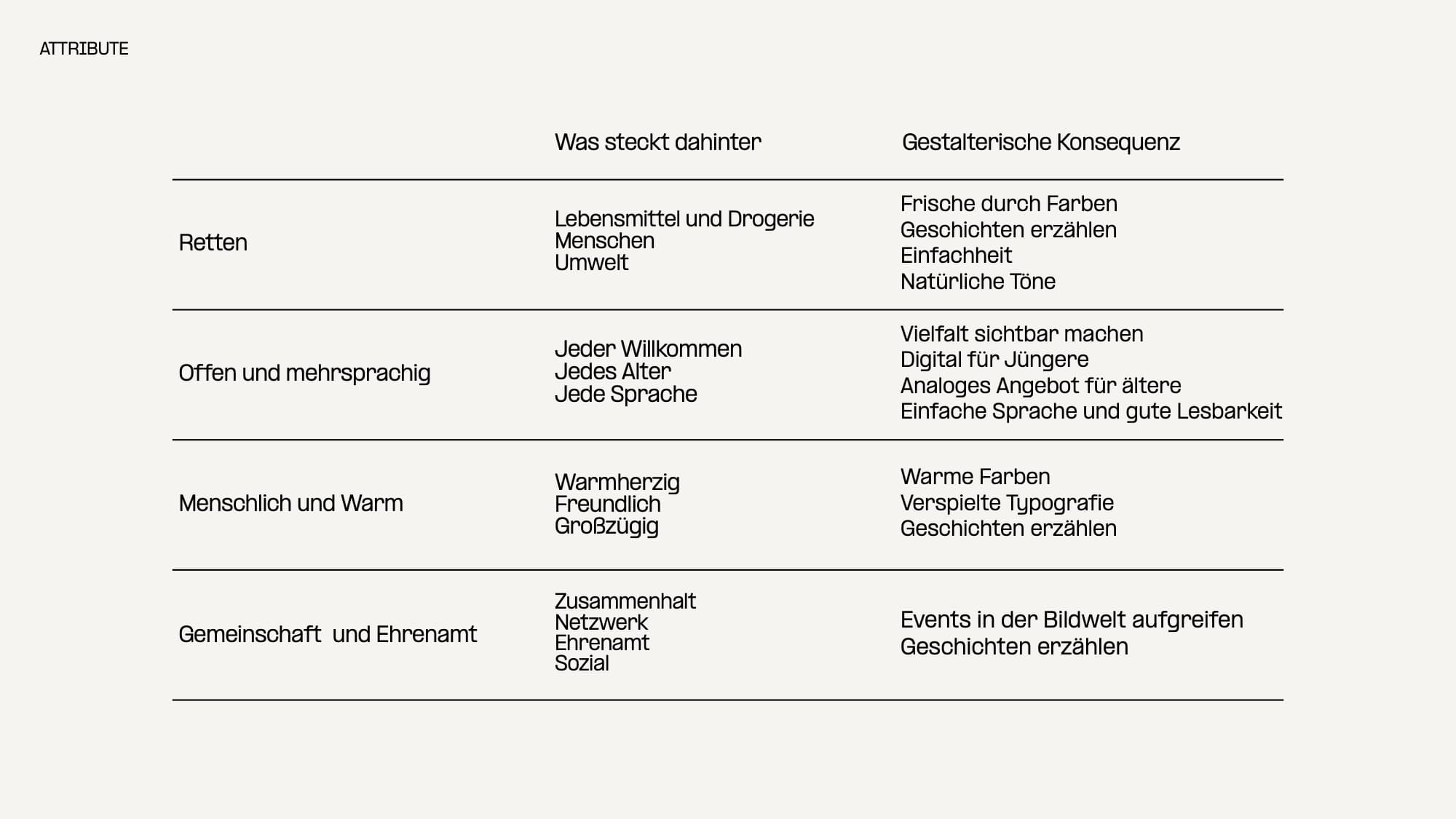
From attributes to decisions
Instead of a moodboard-first approach we translated each attribute into a design rule — open & multilingual → plain language and a highly legible typeface (Atkinson Hyperlegible); human & warm → real volunteer photos and warm colours.
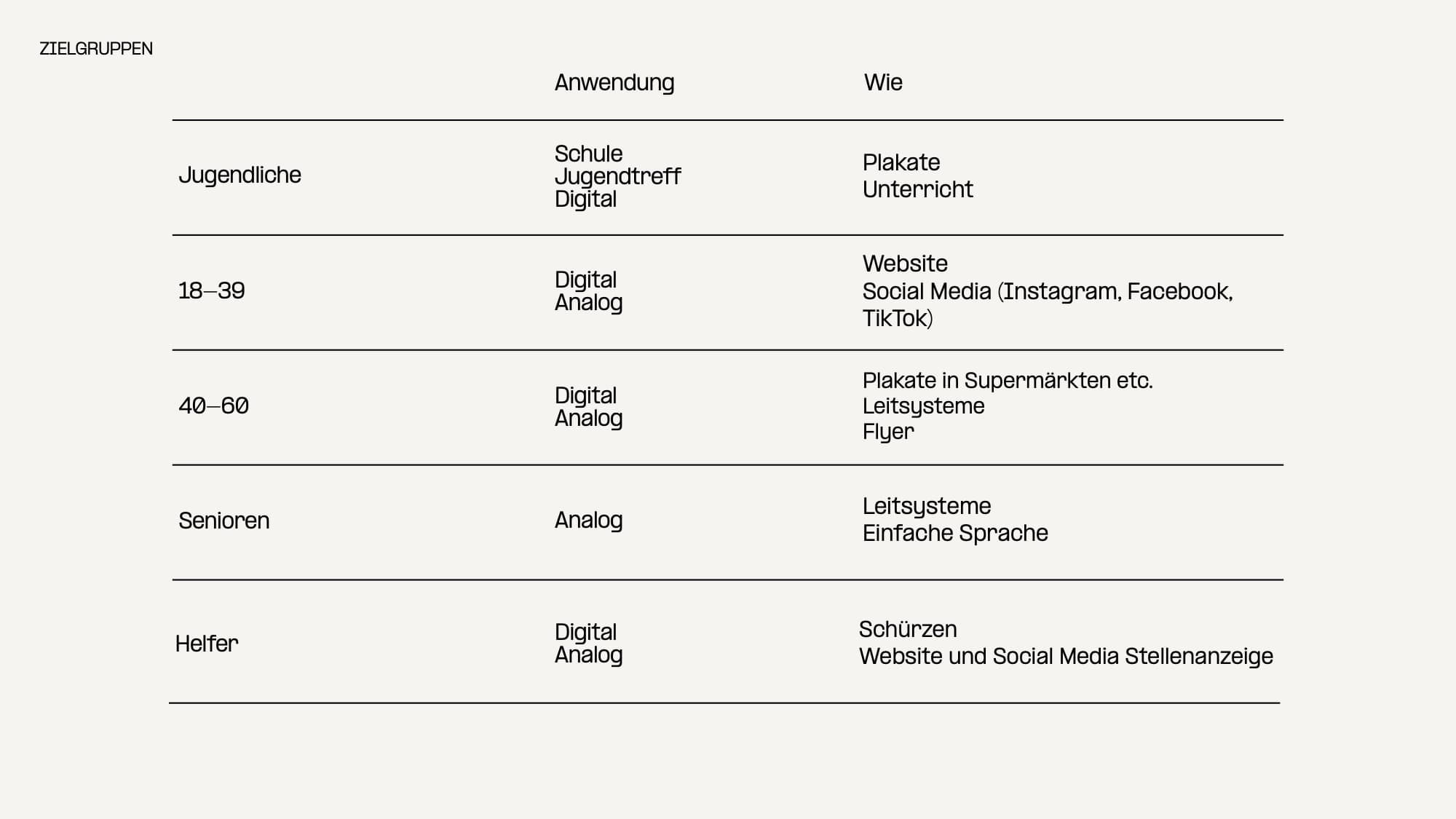
The identity
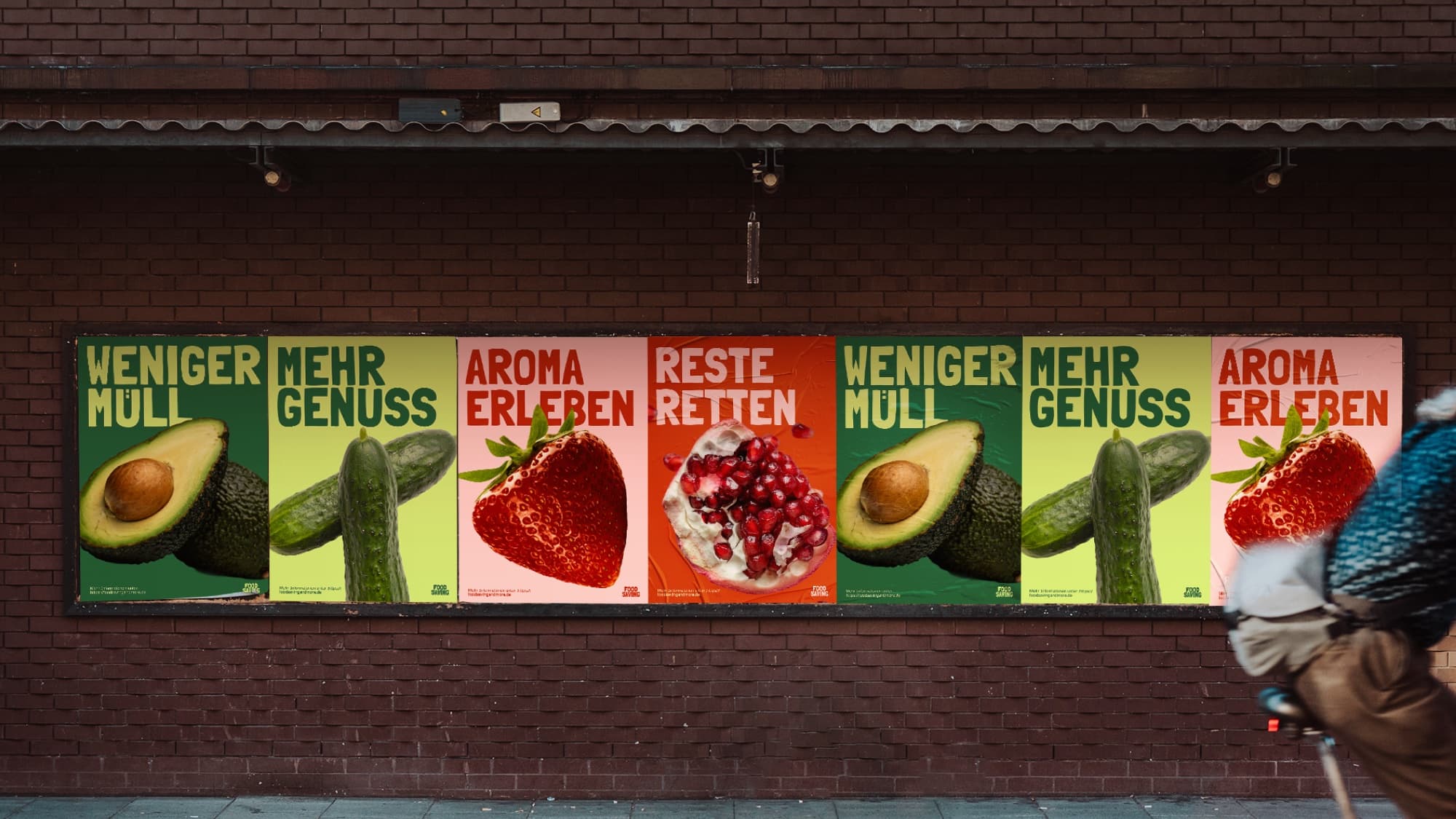
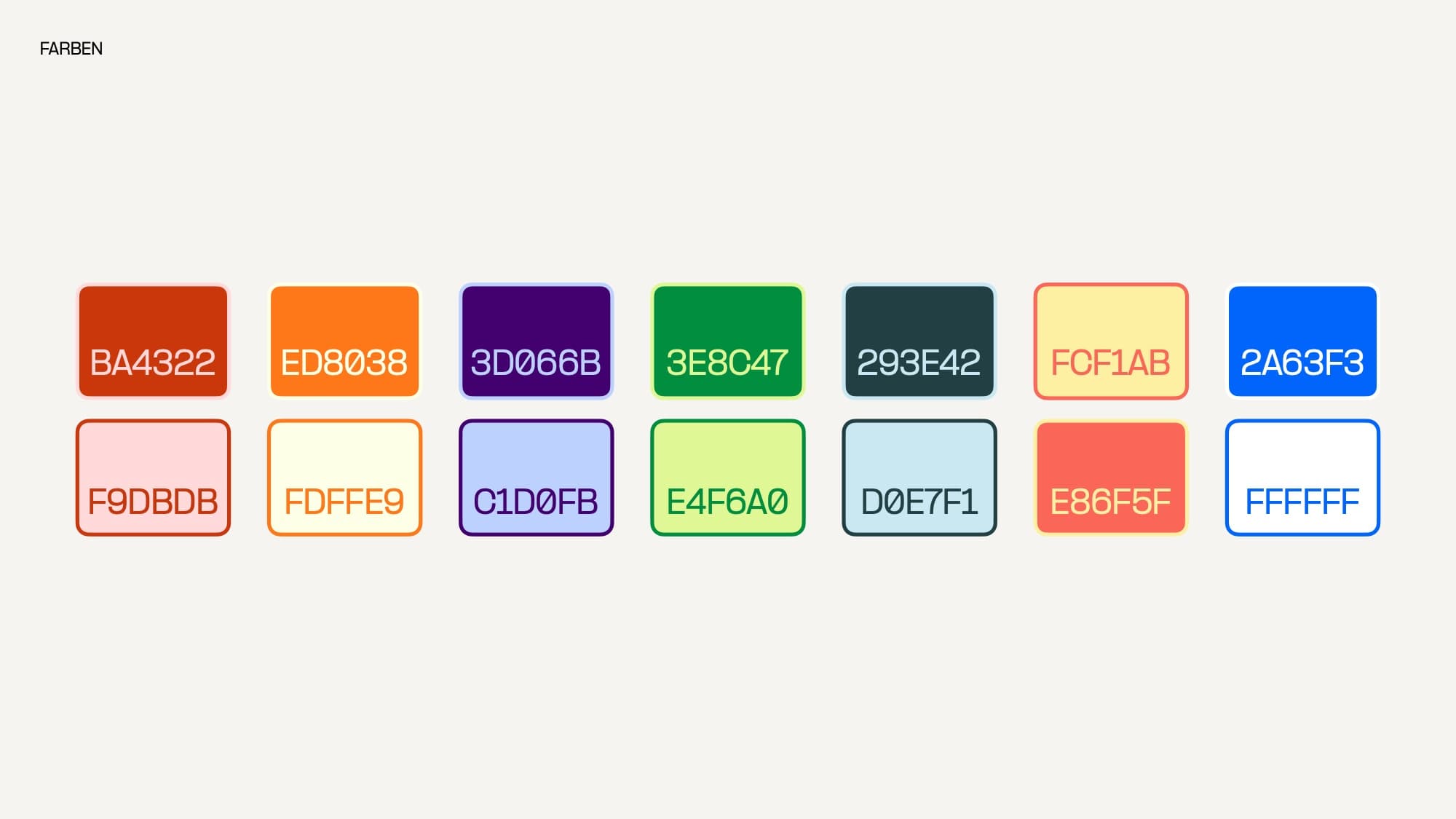
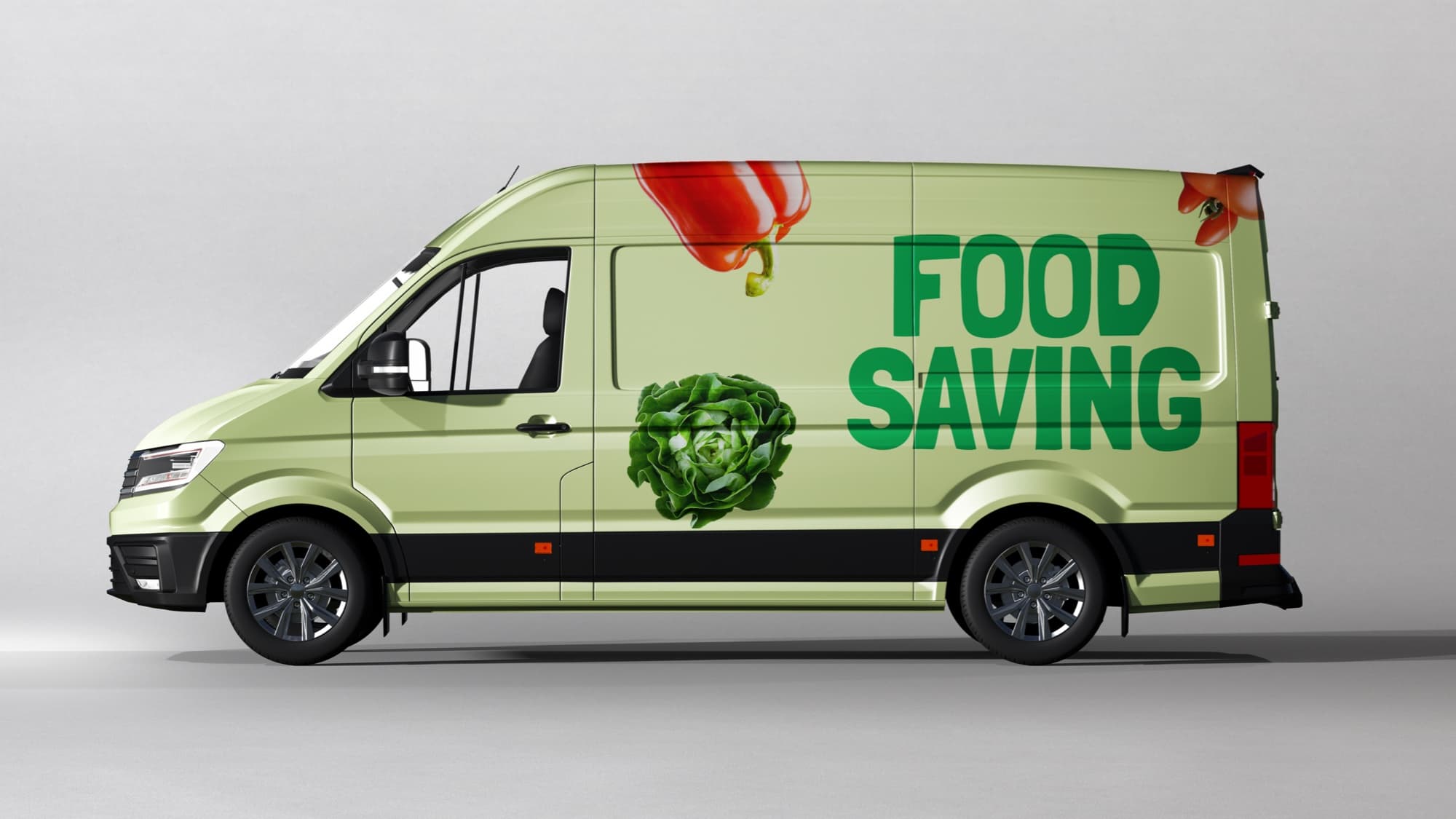
The website I built
- Six pages including an interactive map of 43 real distribution points, geocoded from the association's own list.
- Accessible by default: works without JavaScript, respects reduced-motion settings, skip links and focus styles.
- Performance: an image pipeline cut the assets from 167 MB to 1.9 MB.
- Feedback loop: a password-protected preview so the association and our professor could review, followed by iteration rounds and an alternative design branch.
What I learned
Designing for a real organisation means designing for its least digital user as seriously as for the target group you want to win. Research on site — not desk research — showed us who that was.